

Moving fast can win shelf space, but it often comes with unseen financial tradeoffs.
Speed-to-market can accelerate early revenue and retail placement, but it often introduces hidden financial costs through margin erosion, inefficient operations, and cash flow strain. For emerging CPG brands, moving too quickly without cost discipline can undermine long-term profitability and scalability.
For emerging CPG brands, speed-to-market is often treated as a requirement rather than a choice. Retail timelines, investor expectations, and competitive pressure all reinforce the idea that faster is better.
Retail buyers operate on fixed calendars tied to category resets. Missing a window can delay entry by months, which creates urgency at the founder level. At the same time, early traction is often used as a proxy for success, pushing brands to prioritize launch velocity.
This creates a structural bias toward speed.
But speed is not inherently valuable. It is only valuable if it leads to sustainable growth. When speed is pursued without cost visibility, it shifts financial pressure into less visible areas of the business.
Many of these pressures do not show up immediately in top-line performance. They appear later in margin compression, operational inefficiency, and capital constraints that are harder to fix once embedded in the business.
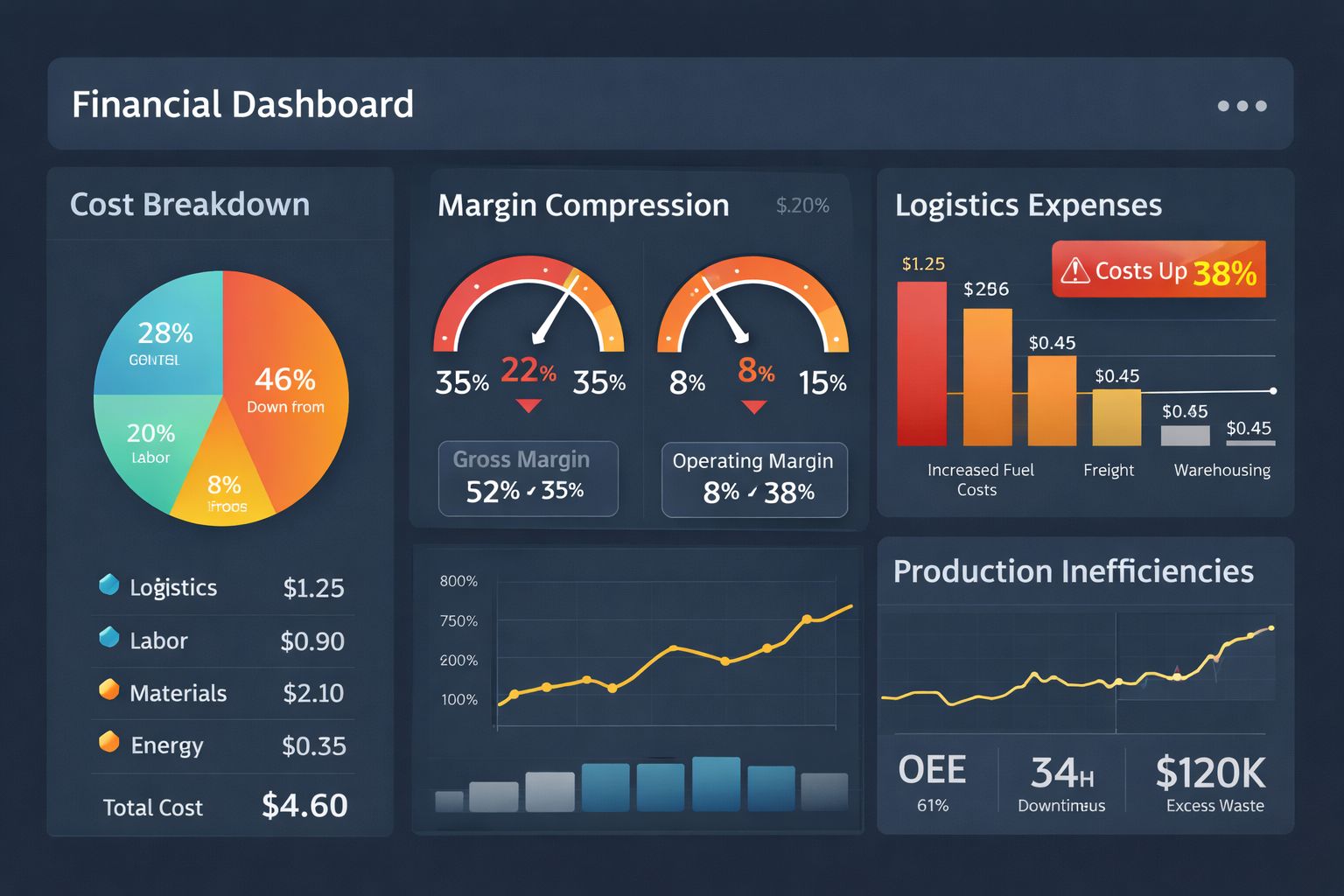
The financial impact of speed-to-market tends to concentrate in a few predictable areas. This is often driven by what we see as lack of visibility acting as a silent profit driver of cost in CPG.
Production inefficiency is one of the most immediate. Smaller or rushed production runs typically carry higher per-unit costs because co-packers optimize for scale and predictability. Brands that prioritize speed often accept less favorable pricing to secure timelines¹.
Logistics costs also increase. Expedited freight, air shipping, and last-minute distribution decisions significantly raise landed costs. These are rarely part of initial planning assumptions but become unavoidable under time pressure³.
Packaging decisions are another source of hidden cost. Fast launches often bypass optimization, leading to higher material costs or formats that are inefficient to scale. These decisions frequently require revision shortly after launch, adding additional expense.
Finally, promotional pressure increases. Brands that rush to market often rely heavily on trade spend to generate early velocity, including discounts, slotting fees, and promotional allowances that compress margins early in the product lifecycle².
One of the most persistent consequences of speed-to-market is how it locks in margin structure.
When products launch with elevated costs, pricing decisions are made quickly to remain competitive on shelf. Retailers expect price stability, and consumers anchor to initial price points faster than many founders anticipate.
This creates a structural constraint.
If cost of goods sold is too high at launch, margins are compressed from the start. Adjusting pricing later is difficult and often resisted at both the retailer and consumer level².
At the same time, reducing costs post-launch requires operational changes that are not immediate. Supplier renegotiation, packaging redesign, and production optimization all take time and carry execution risk.
The result is a product that generates revenue but lacks financial efficiency. For brands under $20M, this directly impacts reinvestment capacity and increases reliance on external capital.
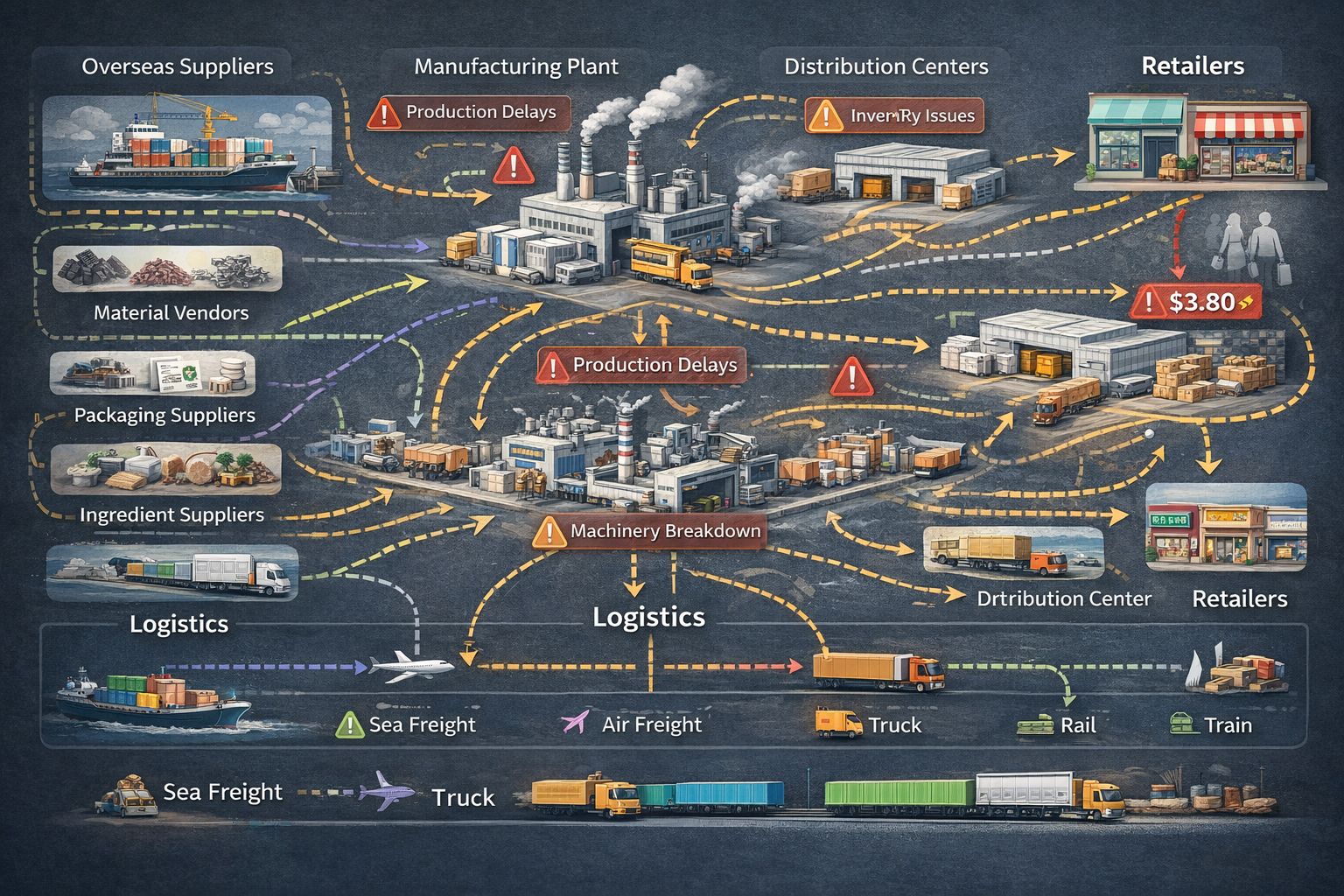
Speed-driven decisions often prioritize immediacy over structure.
Brands may onboard sub-optimal suppliers, accept fragmented logistics solutions, or operate with temporary workarounds that were never intended to scale. Over time, these decisions become embedded in the operating model.
Operational complexity increases as a result.
More vendors reduce negotiating leverage. More logistics paths increase coordination costs. More variability introduces greater risk of delays, errors, and waste³.
These inefficiencies are not just operational issues. They are financial ones. They increase cost structure and reduce the organization’s ability to scale efficiently.
Speed-to-market also alters cash flow timing in ways that are frequently underestimated.
Rapid launches require upfront spending across production, packaging, logistics, and trade commitments. At the same time, revenue collection is delayed due to standard retail payment terms, which can extend 30 to 90 days⁴.
This creates a working capital gap.
Brands are deploying capital aggressively while waiting extended periods to recover it. If margins are already compressed, this gap becomes more difficult to sustain.
The implications are significant. Brands may need to rely on short-term financing, delay growth investments, or accelerate fundraising timelines.
Speed, in this context, becomes a financial decision with direct implications for liquidity and risk.
Speed should not be eliminated. It should be managed.
The most effective brands align launch timing with financial readiness. They ensure cost structures are stable enough to support margin, and that operational decisions can scale without constant revision.
This requires asking better questions before accelerating.
Is the cost structure optimized for sustainable margins?
Are supply chain and logistics decisions scalable?
Does the timeline allow for meaningful cost negotiation?
Will this approach introduce complexity that is difficult to unwind?
Brands that treat speed as a strategic lever rather than a default behavior are better positioned to build durable growth.
The goal is not to move slower. The goal is to move smarter.
Speed-to-market can create opportunity, but only when supported by financial discipline and operational clarity. Without those, it introduces hidden costs that compound over time. These are all part of the broader hidden financial cost of poor retail execution.
For emerging brands, the priority should be building a model that supports both execution and efficiency.
Speed gets you on the shelf. Discipline keeps you there.
For strategy or implementation support, contact us below.
Scale Production Without Losing Quality or Margin
Retail Planning Without Breaking Cash Flow
Margin Protection: Planning Discipline in CPG
1. McKinsey & Company, Driving growth in consumer packaged goods
2. Deloitte, Improving margins in consumer products
3. Harvard Business Review, The hidden costs of complexity
4. JPMorgan, Working capital in retail and consumer goods
