

Retail promotions can drive short-term volume, but not all promotions produce real ROI.
Trade spend only produces real retail ROI when promotions increase sustained consumer demand rather than temporarily shifting purchases between weeks or inventory cycles. Many retail promotions create short-term shipment lift through forward buying, pantry loading, or retailer inventory movement without improving long-term velocity. Trade spend pays back when promotions strengthen baseline shelf movement, create repeatable demand, or support distribution growth that continues after the event ends.
· Many retail promotions shift purchasing timing rather than increasing true consumer demand.
· Forward buying by retailers and distributors can inflate promotional shipment volume while weakening post-promotion sales.
· Promotions that combine price reduction with strong shelf visibility are more likely to generate sustained lift than price reductions alone.
· Trade spend ROI depends on whether the promotion improves baseline velocity rather than producing temporary shipment spikes.
· Retail buyers evaluate promotions through category productivity and shelf efficiency, not just brand shipment volume.
CPG brands spend billions on trade promotions every year.
But very little of that spending is measured against real retail ROI.
Promotions can create impressive shipment spikes during promotional windows, but those spikes often disappear once the promotion ends. In many cases, promotions simply shift when products are purchased rather than increasing real consumer demand.
Trade spend can accelerate retail growth when it amplifies genuine consumer demand. However,when promotions primarily shift purchasing behavior between weeks, retailers, or inventory cycles, they can compress margins without improving long-term velocity.
Understanding which promotions actually pay back is one of the most important financial disciplines for emerging CPG brands.
CPG founders and brand leaders often evaluate promotional success using shipment volume during the promotional window. When retailer orders rise and case movement appears to accelerate, the promotion looks successful on paper.
That interpretation is understandable, but it is incomplete. Shipment spikes do not always reflect real consumer demand. Retailers may load inventory before the promotion begins, and consumers may buy more units during a temporary price reduction without changing their long-term purchasing habits.
Those behaviors can make a promotion look productive while simply changing when purchases happen. The result is a growth story built on timing effects rather than sustained demand.
For brands trying to scale retail profitably, that distinction matters. A promotion that lifts shipments for one week but leaves baseline shelf movement unchanged does little to strengthen long-term retail economics.

Retail promotions often generate impressive short-term volume spikes. Shipments increase, retailers place larger orders, and the brand may see a temporary surge in store movement. However, sustainable retail success depends on baseline velocity, not promotional spikes.
Baseline velocity measures how consistently a product sells when it is not being promoted. If a promotion temporarily lifts sales but leaves baseline velocity unchanged, the promotion rarely creates meaningful long-term ROI.
This is where many brands misread the signal. A spike in promotional volume can reflect inventory loading, pantry loading, or temporary price sensitivity rather than stronger repeat demand. When that happens, the promotion creates a visible sales event without improving the health of the business.
Trade spend earns its keep when it strengthens post-promotion movement, not just promotional-week shipments1. Brands that measure promotion success through sustained velocity are far more likely to separate real retail growth from temporary movement.
Forward buying is one of the most common distortions in trade promotion analysis. Retailers and distributors frequently purchase larger quantities during promotional pricing periods to reduce future purchasing costs and improve near-term margin.
That behavior increases promotional shipment volume, but it often creates a post-promotion trough. Retailers spend the following weeks selling through previously purchased inventory rather than placing new orders, which makes the promotional period look strong and the weeks after look weak.
From the brand’s perspective, the promotion appears to drive growth. In reality, the activity may have simply shifted purchasing across the retailer’s inventory cycle. Consumption has not necessarily increased, but the shipment curve makes it look as though demand surged and then cooled.
This is why shipment-based promotion analysis can be misleading. Without true sell-through visibility, brands can overstate trade spend performance and keep funding programs that move inventory timing more than consumer demand2.

Not all trade promotions behave the same way. Promotions that combine price reduction with strong shelf visibility, such as end-caps, secondary placement, or feature support, tend to generate stronger shopper engagement than price reduction alone.
That difference matters because visibility changes the quality of the promotion. Price reduction by itself often rewards existing buyers. Price reduction combined with prominent placement is more likely to create discovery, trial, and incremental basket behavior.
Promotions are most productive when they help the shopper notice the product, understand the value, and make a first purchase that has a chance to repeat later. In other words, the best promotions do more than lower price. They improve the product’s chances of becoming part of normal shopping behavior.
Promotion economics also improve when brands anticipate the inventory loading that often occurs ahead of a major event. If display support and feature visibility are paired with a supply plan that can absorb pre-promotion ordering without distorting the interpretation of demand, the brand gets a clearer read on what the program actually accomplished.
For emerging brands, this is the trade spend distinction that matters most. The goal is not merely to create promotional volume. The goal is to create lasting shelf movement through programs that produce stronger awareness and repeat demand3.
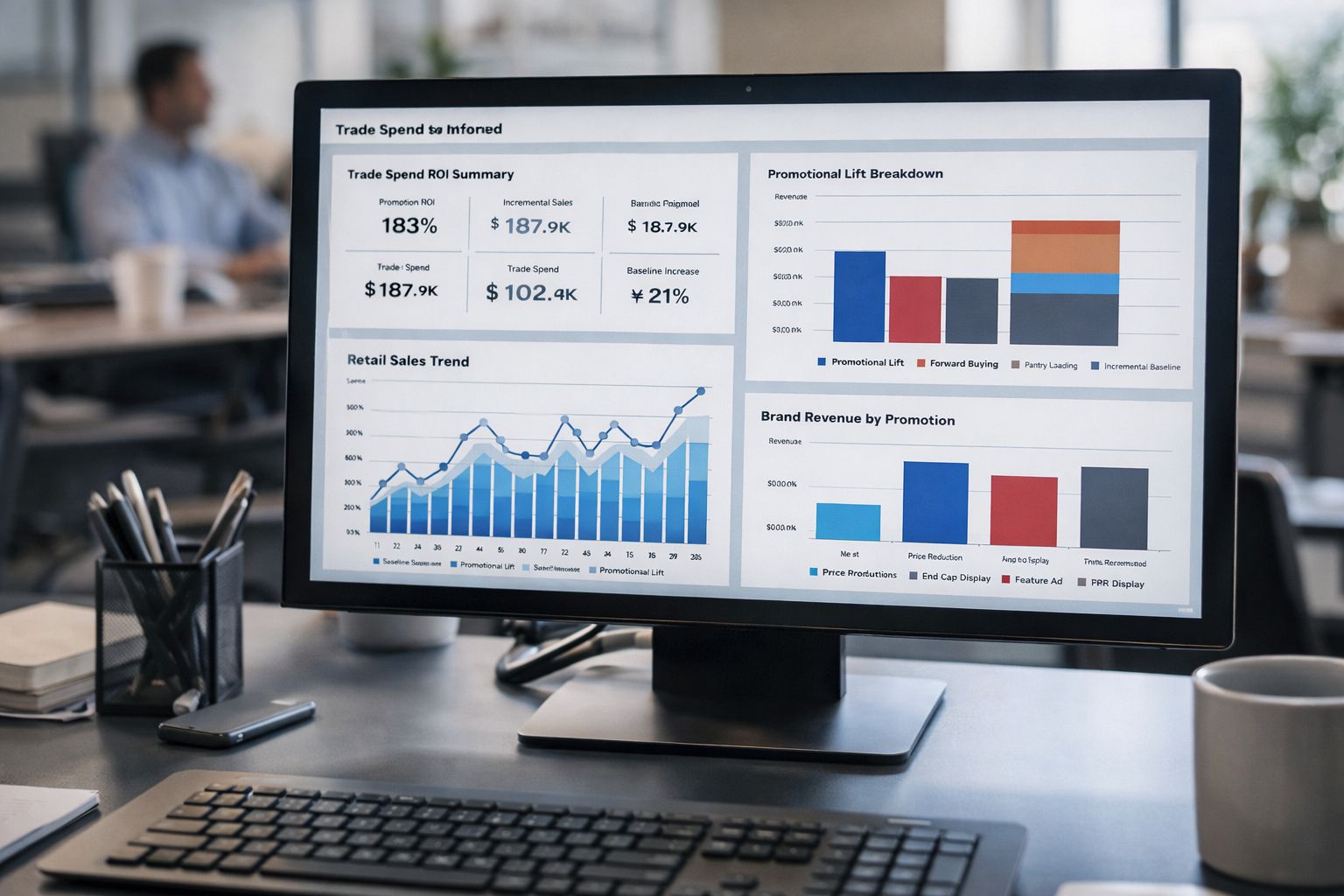
Retail buyers do not evaluate promotions the same way many brands do. Brands often focus on shipment volume and short-term lift. Buyers focus on category productivity, shelf efficiency, and whether a promotion improves the economics of the space it occupies.
A buyer wants to know whether the promotion increased category traffic, created stronger shelf movement, or improved revenue productivity per linear foot. Promotions that merely move inventory temporarily are less compelling than promotions that improve the overall productivity of the set.
This is why disciplined promotion design matters. Buyers are more likely to support programs that create useful consumer activity and less likely to reward promotions that consume margin without changing shelf economics.
For brands that want stronger buyer credibility, trade spend must be planned and measured as a retail productivity decision, not just a shipment event4.
Trade promotions can accelerate growth when they support real consumer demand and improve sustained shelf movement.
However, promotions that mainly shift purchases across weeks, retailers, or inventory cycles often reduce profitability while creating misleading shipment spikes.
For emerging CPG brands, the challenge is not simply funding trade spend. The challenge is identifying which promotional investments actually create durable retail productivity.
That discipline matters to retailers as well. Brands that understand what truly pays back tend to plan cleaner programs, set more realistic expectations, and create fewer downstream surprises in buyer reviews. Over time, that improves trust and makes future promotional planning easier to support.
Brands that treat trade spend as a financial discipline rather than a routine marketing expense are far more likely to build sustainable retail growth.
If your team is trying to understand whether your trade programs are building velocity or just buying temporary movement, this is the right moment to review the economics more closely. CPGBrokers and Associates can help evaluate trade spend structure, promotional design, and retail productivity risk before more dollars are committed.
If you want a fast, reality-based review of your trade spend model and promotion ROI assumptions, book a conversation with CPGBrokers and Associates below.
1. NielsenIQ – Trade Promotion Optimization
2. McKinsey – How analytics can drive growth in consumer-packaged-goods trade promotions
3. Circana – Price & Promotion solutions
4. FMI – Food Retailing Industry Speaks
