
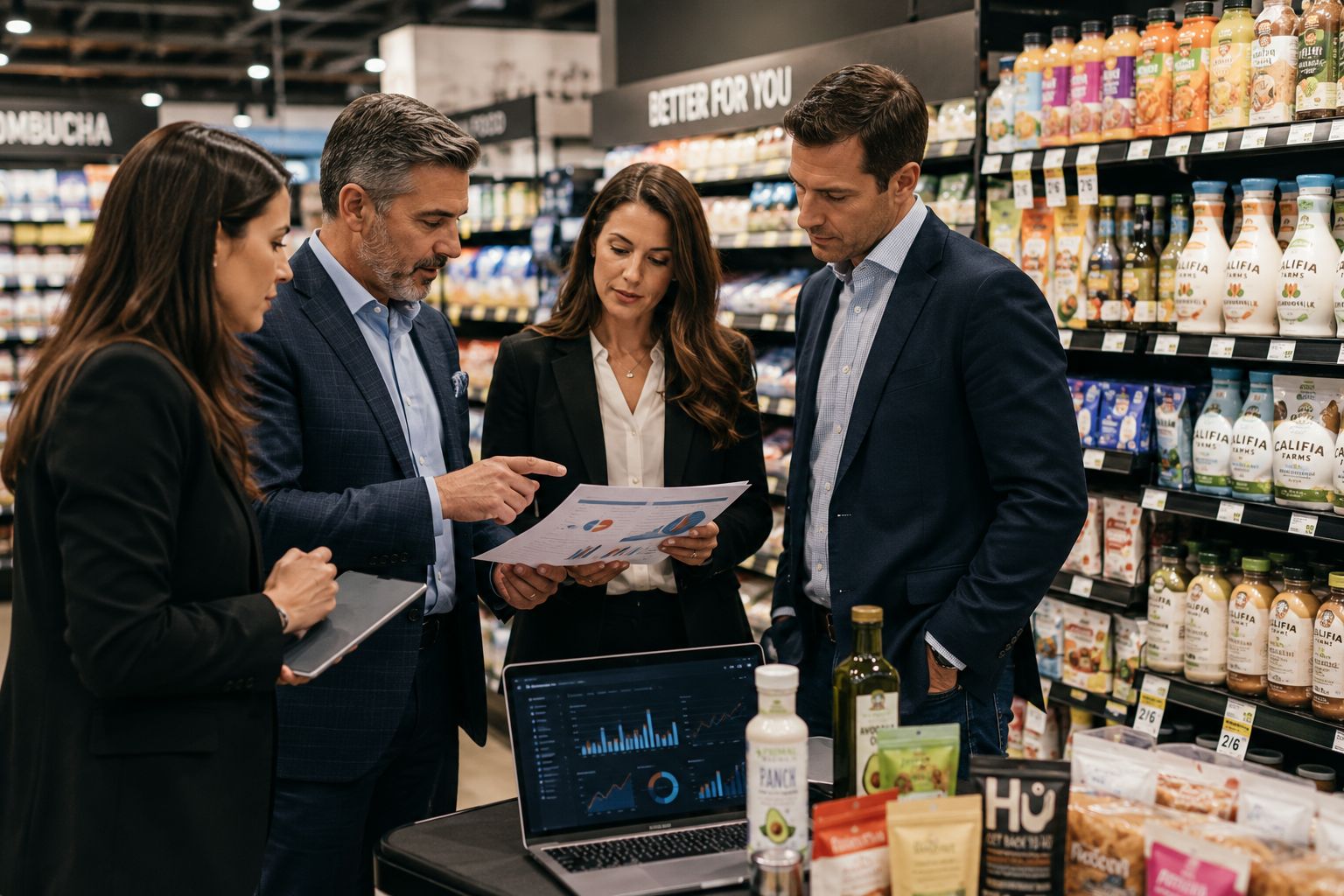
Retail execution directly influences retailer confidence, shelf productivity, and long-term growth.
Many emerging CPG brands still manage retail execution as a downstream operations function instead of a strategic growth discipline. In practice, in-store execution affects velocity, retailer confidence, replenishment consistency, and trade efficiency just as directly as sales or marketing strategy. Brands that operationalize retail execution early are often better positioned to scale sustainably as distribution expands.
Emerging CPG brands often focus heavily on securing new retail distribution, especially during early growth stages. Distribution wins are measurable, visible, and frequently treated as the primary indicator of commercial progress. Once products are authorized into stores, however, many leadership teams shift attention toward the next sales opportunity rather than the quality of execution happening at shelf level.
That disconnect creates one of the most common operational vulnerabilities in emerging consumer brands.
Retail execution is the mechanism that converts distribution into actual retail performance. Shelf placement, replenishment consistency, display compliance, plan-o-gram adherence, and product availability all influence whether a consumer can successfully purchase the product when demand exists. Without consistent execution, even strong brands can experience declining velocities and inconsistent reorder patterns despite increasing retail presence.
This becomes especially problematic for brands under $20M in revenue because execution gaps often remain hidden during earlier growth phases. Leadership teams may interpret slowing performance as a pricing issue, a marketing issue, or a retailer issue when the underlying problem is operational inconsistency at store level.
In many cases, the brand strategy itself is not failing. The execution environment supporting the strategy is failing.

Retailers do not separate operational execution from overall supplier capability as cleanly as many emerging brands assume. From the retailer perspective, execution reliability directly affects category performance, labor efficiency, customer experience, and inventory management.
When stores experience repeated stock-outs, incomplete resets, poor merchandising compliance, or inconsistent promotional execution, the retailer absorbs operational friction. Store teams spend additional time correcting issues, category managers lose confidence in performance consistency, and promotional planning becomes more difficult to forecast accurately.
For larger suppliers, sophisticated field infrastructure often helps stabilize execution. Emerging brands rarely have those same resources in place early. As a result, retailers frequently use execution quality as a proxy for operational maturity.
That perception matters more than many founders realize.
A retailer may initially authorize distribution because the product fills a category need or demonstrates strong consumer positioning. Long-term expansion opportunities, however, are often influenced by how reliably the brand supports execution after placement occurs. Retail buyers want confidence that inventory, merchandising, displays, and promotional support will perform consistently across regions and banners.
Strong execution signals operational discipline. Weak execution creates concerns about scalability.
Over time, those perceptions can influence:
Execution therefore becomes more than an operational responsibility. It becomes part of the retailer relationship itself.
One reason retail execution remains undervalued is because its failures often appear elsewhere inside the business.
When velocity softens or regional performance weakens, leadership teams commonly focus on consumer-facing explanations first. Marketing investment increases, packaging adjustments are explored, pricing strategies are reevaluated, and sales teams pursue additional distribution opportunities to offset slowing performance.
Sometimes those actions are necessary. In many emerging brands, however, execution inconsistency is quietly undermining performance before leadership fully recognizes it.
A product cannot maintain expected sales velocity if it is routinely out of stock. Promotional spending cannot generate expected returns if displays are not executed correctly at store level. Consumer demand signals become difficult to interpret when merchandising conditions vary significantly across retailers or regions.
Execution gaps also distort internal analytics. Brands may incorrectly conclude that certain retailers, territories, or product lines are under performing when the actual issue is inconsistent in-store conditions. Without reliable field visibility, leadership teams can end up making strategic decisions using incomplete operational information.
This creates an expensive cycle where organizations continue investing in demand-generation activities while the operational foundation supporting retail conversion remains unstable.
The financial consequences extend beyond immediate lost sales. Persistent execution issues can affect:
As brands scale, those operational inefficiencies become increasingly difficult to contain.

The strongest emerging CPG operators increasingly treat retail execution as a source of strategic intelligence rather than administrative reporting. That shift changes how organizations evaluate growth,allocate resources, and manage retailer relationships.
Execution visibility allows leadership teams to identify operational problems earlier, understand regional inconsistencies more accurately, and respond faster when shelf conditions begin affecting performance. It also improves alignment between sales, operations, forecasting, and field support functions.
Importantly, this does not necessarily require massive infrastructure investments during early growth stages. What matters first is organizational prioritization.
Brands that scale more effectively tend to establish clearer execution accountability early. Sales teams understand that sustainable placements matter more than short-term authorizations. Operations teams build forecasting processes around retail realities instead of assumptions. Broker relationships are evaluated using execution standards, not just distribution metrics.
As store counts increase, this discipline becomes increasingly valuable.
Many emerging brands encounter operational complexity challenges during regional expansion because execution oversight fails to scale at the same pace as distribution growth. Store variability increases, merchandising inconsistency widens, and leadership visibility declines. By the time these issues materially affect retailer relationships or velocity trends, correction becomes far more expensive.
Organizations that operationalize execution discipline earlier typically maintain stronger visibility into what is happening between retailer authorization and consumer purchase. That visibility creates better strategic decision-making across the business.
Smaller brands often assume advanced retail execution systems are primarily necessary for larger national suppliers. In reality, emerging brands frequently have less margin for execution failure because they operate with tighter budgets, fewer retail opportunities, and less retailer patience.
A multinational supplier may absorb temporary execution inconsistency without materially damaging retailer relationships. Emerging brands usually do not have that same flexibility.
That reality requires a different mindset from leadership teams.
Retail execution should not be treated as a support function that reacts after sales activity occurs. It should be integrated into growth planning itself. Execution quality directly influences how effectively the organization converts distribution into sustained shelf productivity and repeat retail performance.
For founders and executive teams, that means reevaluating:
These are not back-office operational questions. They are growth-management questions.
The brands that scale most effectively are rarely the brands with the loudest messaging alone. More often, they are the organizations that consistently execute across the retail environment while competitors struggle with operational inconsistency.
Retail execution has become too commercially important to remain isolated within operations alone. For emerging CPG brands, execution quality influences retailer trust, shelf productivity, promotional performance, inventory stability, and long-term scalability.
As retail environments become more operationally demanding, brands that build execution discipline early are often better positioned to protect velocity, strengthen retailer relationships, and expand more sustainably over time.
Growth strategy does not end once distribution is secured. It continues at shelf level every day products compete for visibility, availability, and conversion inside the store.
For strategy or implementation support, contact us below.
1. P2PI, “2023 Shopper Engagement Study”
2. NielsenIQ, “Out-of-Stocks: A Worldwide Examination of Extent, Causes and Consumer Responses”
3. McKinsey & Company, “The State of Grocery Retail 2025”
4. Bain & Company, “The Traits of Winning Consumer Products Companies”
5. Deloitte, “2025 Consumer Products Industry Outlook”
