
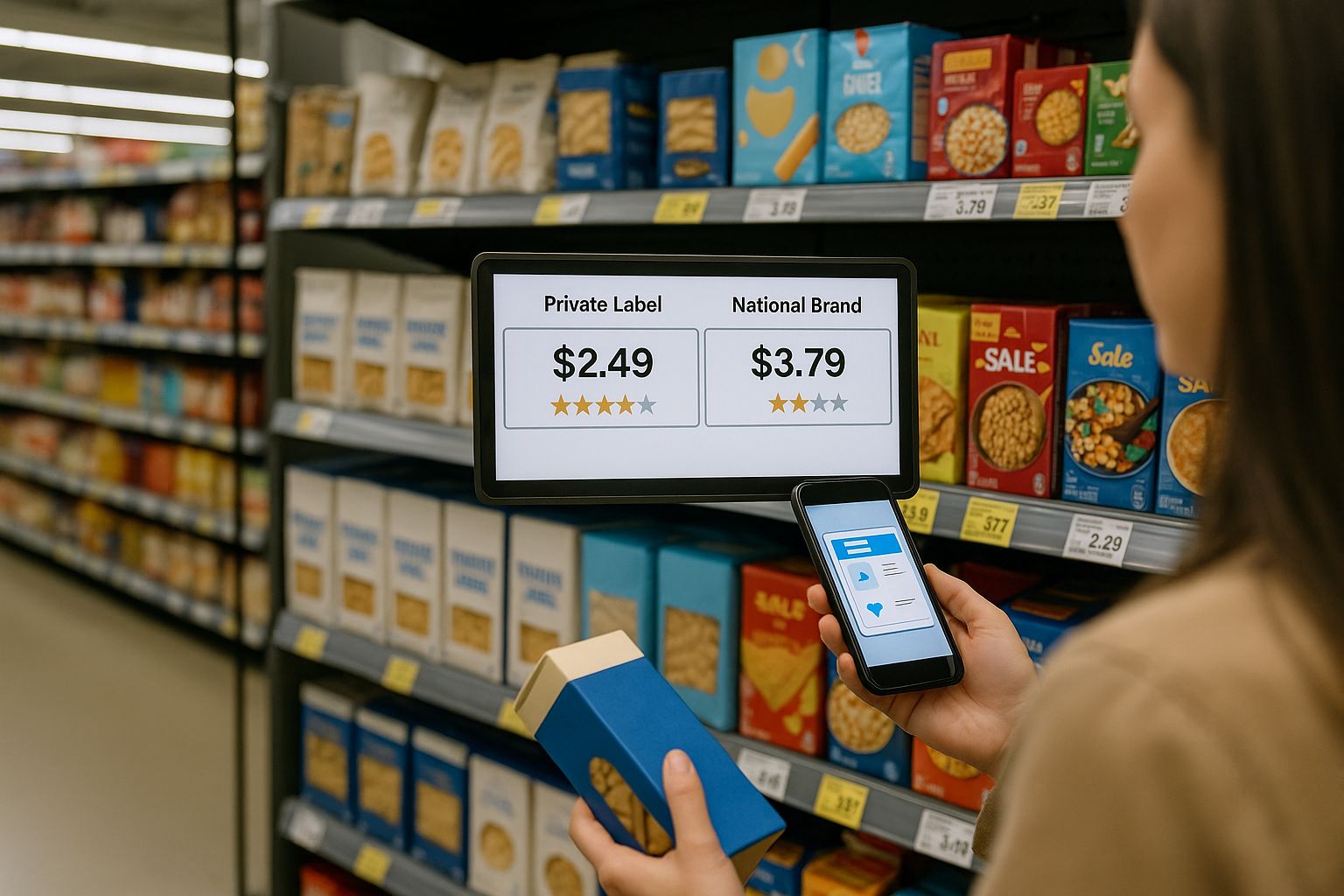
Digital shelves make value comparisons clearer than ever.
Private label continues to expand rapidly heading into 2026as shoppers prioritize value, retailers use loyalty data more aggressively, and digital shelves amplify the price–performance comparison. National brands can still win by sharpening value stories, improving retailer collaboration, and modernizing innovation and retail media strategies to match today’s consumer expectations.
- Private label growth is outpacing national brands across most major channels, led by retailer data advantages and curated assortments¹.
- Consumers increasingly mix private label and national brands depending on category roles, perception of quality, and promotions².
- Retail media effectiveness now depends heavily on retailer collaboration and SKU-level clarity, not broad spend³.
Private label is no longer viewed as a budget-only choice.Retailers have invested in quality upgrades, packaging refreshes, and category expansion. Many of the largest banners now treat private label as a strategic brand portfolio, not a margin tool. As a result, shoppers encounter private label options that feel more premium, more consistent, and more attuned to category trends than ever before.
At the same time, economic pressure continues to reshape buying behaviors. Households that once purchased national brands by default are now more selective. When a private label product offers similar performance at a noticeably lower price, shoppers view the trade-off as logical rather than risky. This shift is especially noticeable in categories where national brands have under-communicated their value or relied too heavily on legacy equity without updating benefits.
Retailers also have powerful data advantages. Loyalty ecosystems allow them to see exactly when, why, and how shoppers trade across price tiers. They use these insights to place private label SKUs where they will win: prominent shelf positions, compelling digital banners, and bundled offers that increase trip value. Taken together, these forces create a marketplace where private label feels more visible, more relevant, and more aligned to consumer needs.
This dynamic doesn’t diminish the importance of national brands — it raises the bar. To stay competitive, national brands must prove their value proposition clearly, consistently, and across every touch point.
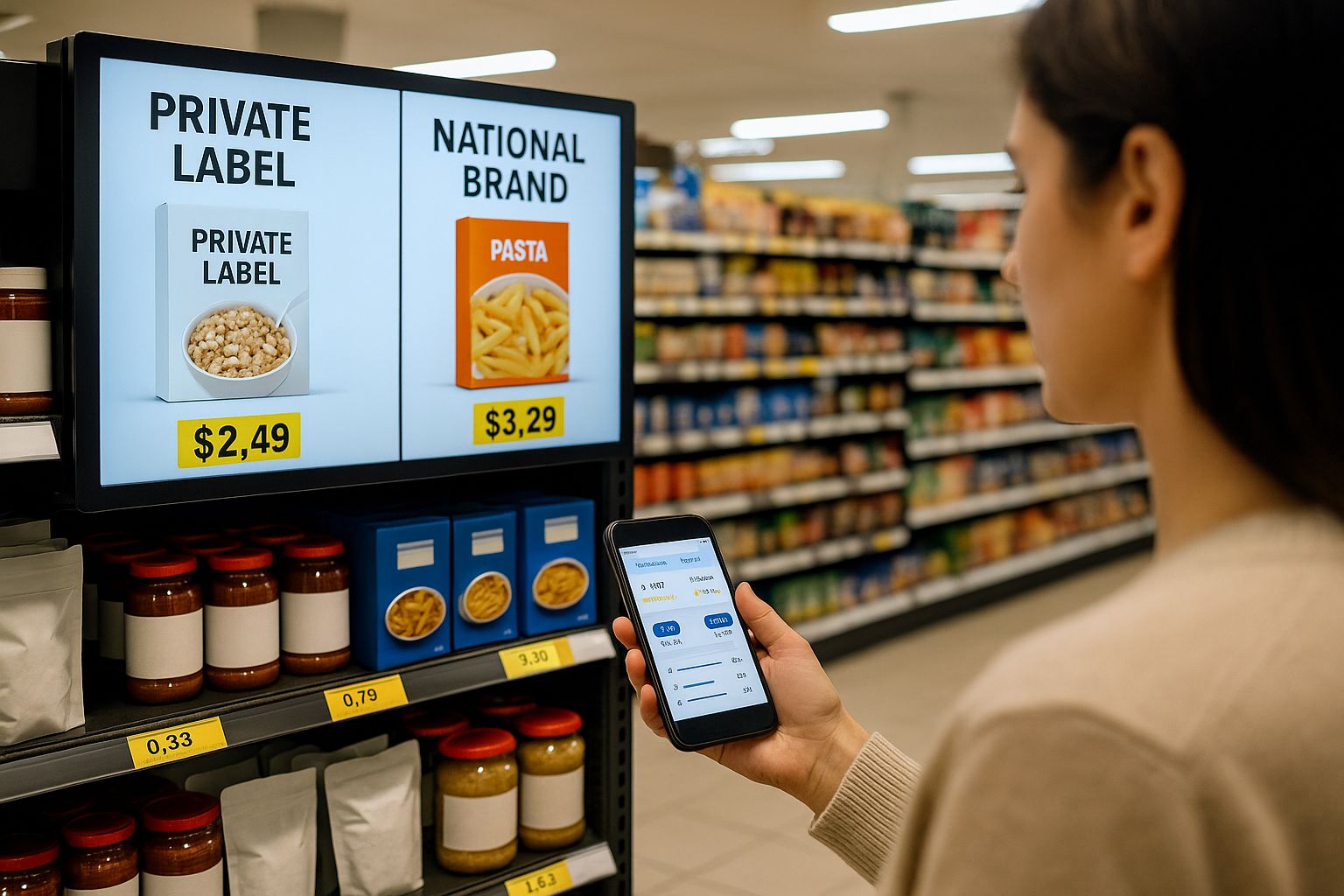
National brands cannot rely on heritage alone to justify pricing. Consumers now expect visible, concrete benefits — whether that’s superior performance, durability, nutrition, sustainability, or convenience.When shoppers can immediately see why a national brand delivers more value than a private label item, they remain willing to pay the premium. Without a clear value story, however, shoppers default to price.
A refined value story requires more than updated packaging or revised claims. Brands need to communicate advantages across the entire shopper journey, including digital shelf cues, lifestyle imagery, in-store signage, and retailer-approved benefit language. When value shows up consistently, it resonates.
Innovation remains one of the strongest national brand advantages — but only when it meets real consumer needs. Small improvements,like better functionality or cleaner ingredients, can reset expectations for the category and reinforce why national brands lead. When innovation solves meaningful shopper problems, private label cannot easily replicate it.
Innovation must also be faster and more intentional.Retailers want items that expand category relevance or attract new buyers.Bringing them innovation that supports category roles strengthens relationships and enhances placement opportunities.
Retail media is no longer optional. It has become one of the most important growth levers for national brands. However, retail media becomes expensive—and ineffective—without aligned targeting and shared objectives.Brands that use retailer-approved audiences and feed SKU-level insights into their campaigns see stronger returns and more predictable performance.
Efficiency also comes from clarity. When brands define specific goals for each retailer — trial, loyalty, upsell, or portfolio expansion — retail media becomes a partnership instead of a spend requirement.Retailers respond to that clarity with better support and improved visibility.
Retailers value national brands that bring forward category insights, not just product benefits. Early collaboration on trends, trip missions, pack architecture, and promotional strategy builds trust. Retailers are more likely to support the national brand with better placement, stronger digital presence, and joint testing when they feel aligned on category growth.
Partnership also means agility. When retailers shift strategies, national brands who adjust quickly earn credibility and maintain relevance. This flexibility is particularly important in categories where private label penetration is rising fastest.
Price gaps only feel justified when shoppers understand what they gain from choosing a national brand. Brands that provide clear proof points — performance tests, quality differences, unique ingredients, or sustainability commitments — help shoppers rationalize their choice. Evidence gives the consumer confidence that the premium price reflects a real benefit.
Protecting pricing power also requires transparency. When brands are open about value drivers, retailers reinforce those messages in their own channels. This creates a consistent narrative that strengthens trust and loyalty.
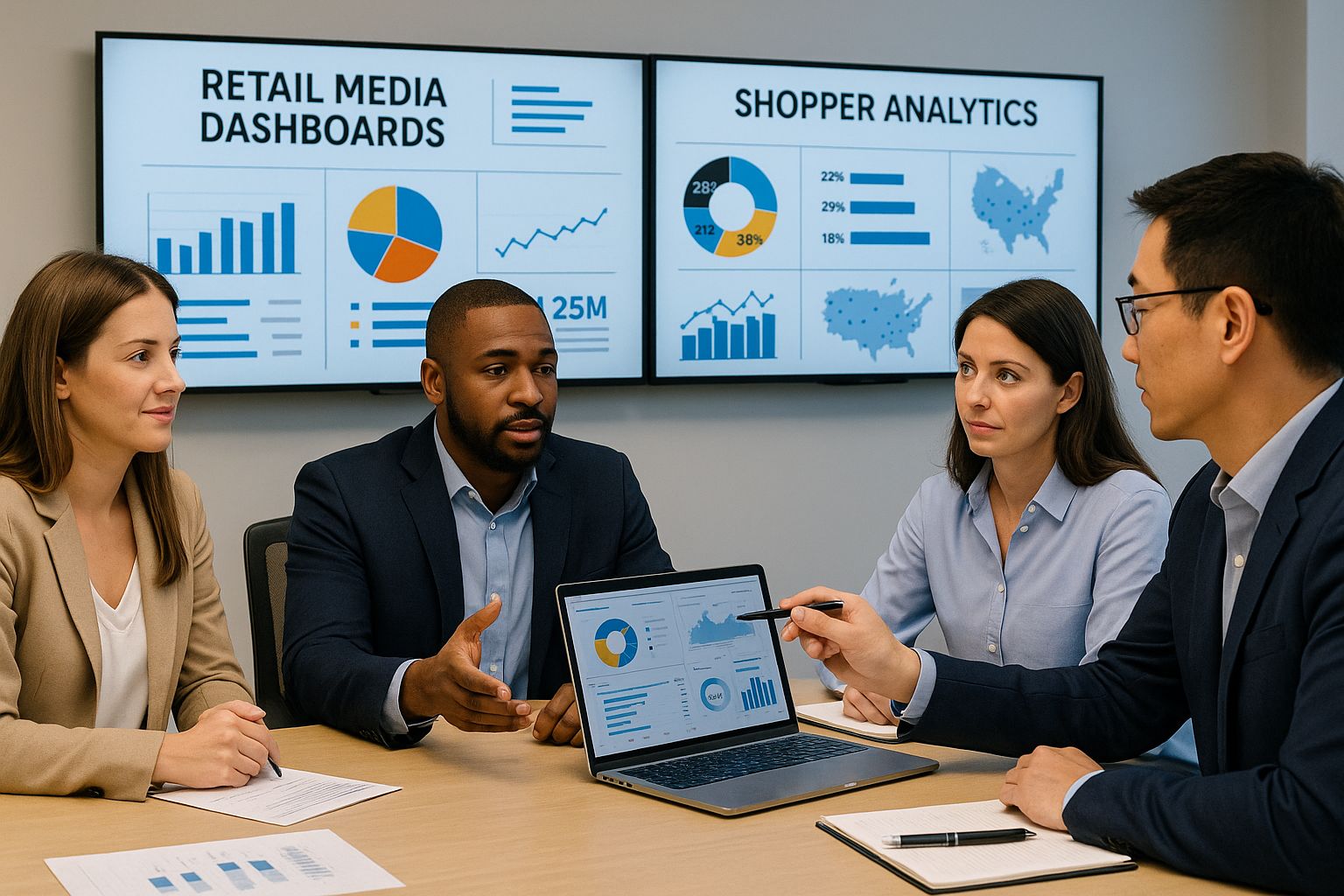
Category growth in 2026 depends on how well national brands balance value, innovation, and retailer partnership. Brands that stay connected to shifting shopper motivations will be better positioned to shape the category narrative. When national brands highlight distinct benefits and reinforce those benefits consistently across channels, shoppers feel more confident choosing them even when private label presence increases.
This year also rewards brands that operate with speed and intention. Whether it’s refining pack sizes, developing new claims, improving sustainability messaging, or testing new promotional strategies, national brands that act quickly will stay ahead of both private label momentum and evolving shopper expectations. With thoughtful execution, national brands can grow in a market where private label is strong — and, in many cases, growing alongside them can lift entire categories.
For strategy or implementation support on retail media,category growth, or competitive planning, contact us below.
1. McKinsey & Company – Private Label Insights
2. NielsenIQ – Private Label and National Brands Comparison
3. Forrester – Future of Retail Media
