

AI-powered insights help CPG teams optimize retail media performance across channels.
AI is transforming Retail Media Networks (RMNs) by improving targeting accuracy, elevating measurement standards, and giving CPG brands clearer visibility into performance across retailers. The result is faster optimization, better spend efficiency, and stronger retail collaboration.
1. AI-driven RMNs enhance audience targeting with real-time behavioral signals.¹
2. Predictive models help CPG brands allocate spend across retailers more efficiently.²
3. AI improves attribution within RMNs by clarifying incremental lift.³
4. Retailers are expanding RMN offerings with AI-enhanced creative and dynamic personalization.⁴
5. CPG manufacturers gain faster visibility into what drives conversion across omnichannel touchpoints.⁵
AI is reshaping how CPG brands identify audiences and activate campaigns inside Retail Media Networks. Historically, RMNs relied heavily on retailer loyalty data, past purchase behavior, and basic demographic segmentation. While these datasets remain indispensable, AI layers deeper behavioral signals on top of them, helping brands understand the context behind each shopper’s decision.
AI-powered targeting now blends real-time search patterns,item affinities, price sensitivity indicators, and cross-category behaviors.¹For example, a shopper browsing plant-based yogurt may display travel-size preferences, coupon usage patterns, or a tendency to switch brands within a category—signals that are easy to miss without AI. These insights allow campaigns to reach the right shoppers with better timing and more relevant messaging.
For CPG teams, this shift means more precise reach without unnecessary spend. Instead of large, loosely-defined segments, AI generates targeted, dynamic cohorts that adjust based on shopper behavior signals across the retailer’s ecosystem. This reduces wasted impressions and helps brands capture high-intent moments earlier in the path to purchase.
AI-enhanced targeting also improves omnichannel coordination. When AI connects in-app searches with store purchases and digital interactions, RMN campaigns become more responsive. A shopper browsing a new seasoning blend online might later receive personalized offers in-store or on a retailer’s offsite program. These cross-surface connections strengthen the value of RMN media and allow CPG brands to deploy budgets with greater confidence.
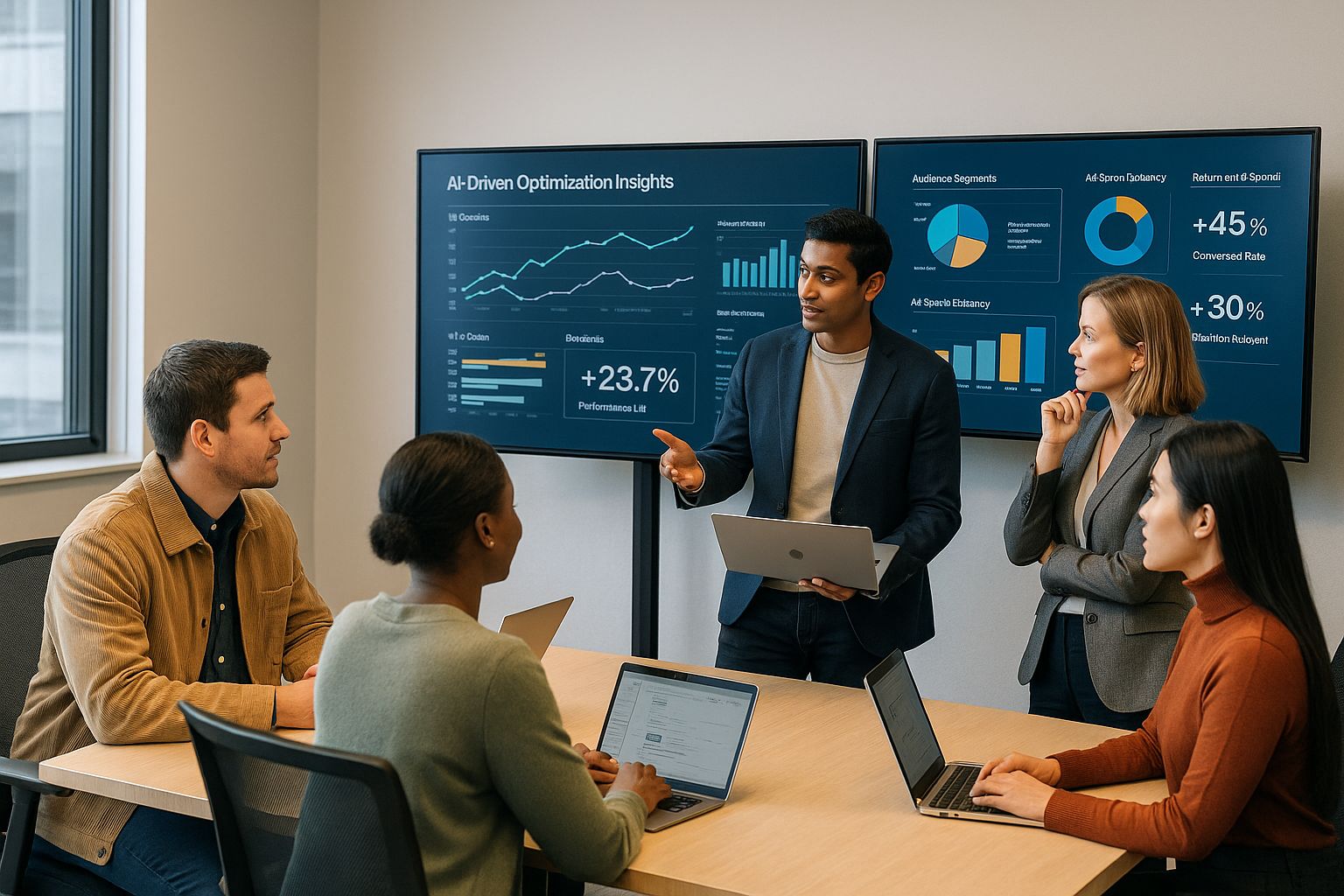
AI’s role within RMN optimization extends far beyond simple bid adjustments. Today’s systems evaluate creative performance, placement timing, and audience overlap to find the highest-value opportunities across a retailer’s owned and operated surfaces.² These models adapt in real time,pulling signals from search behavior, product detail page views, shopping basket trends, and emerging category dynamics.
For CPG teams, the most valuable advantage is improved spend efficiency. AI identifies where budgets are over-performing or under-performing by comparing predicted outcomes to actual results. Campaigns that begin to lose momentum can be re-balanced quickly, ensuring dollars flow toward placements that deliver meaningful incremental lift.
Predictive modeling also supports scenario planning.³Instead of waiting for weekly or monthly reviews, CPG marketers can forecast how shifting spend between placements—or between retailers—may influence overall performance. Retailers are increasingly offering tools that visualize these changes, helping brands build more proactive RMN strategies.
Finally, AI-enhanced optimization improves collaboration between retailers and manufacturers. When both parties use consistent scoring models, it becomes easier to review performance, align on goals, and build co-developed programs with shared clarity. This unified understanding accelerates decision-making and reduces the friction that often slows cross-functional planning.
Attribution has always been one of the biggest challenges for CPG brands investing in Retail Media Networks. Traditional reporting often centers on impressions, clicks, and basic return-on-ad-spend (ROAS). While these metrics give directional insight, they’re not always enough to determine true incremental lift or cross-channel influence. AI is beginning to change that, enabling deeper clarity into how each RMN investment contributes to real brand and category growth.
AI-driven attribution models evaluate far more variables than human analysts can realistically manage.⁴ They analyze multichannel behaviors, comparing exposed and unexposed cohorts to detect whether campaigns are driving net-new shoppers, accelerating repeat purchase, or influencing basket expansion. These insights help CPG brands understand where RMN spend is producing measurable value—and where it is not.
AI also enhances incrementality modeling by identifying hidden correlations. For instance, a shopper who never clicked an ad but later purchased the product may still have been influenced by an upstream impression or shelf-side placement. Attribution models that incorporate AI can analyze these patterns more accurately, revealing cause-and-effect relationships that traditional reporting often misses.
For CPG teams managing large omnichannel budgets, this level of granularity enables smarter spend decisions. Brands can reallocate budgets toward tactics proven to drive incremental return, while simultaneously reducing waste on placements that merely capture existing demand. Retailers benefit as well; when performance is transparent and consistent, partnerships strengthen and co-developed programs become more efficient and predictable.

AI is improving collaboration between retailers and CPG manufacturers by giving both parties a shared foundation for planning,forecasting, and reviewing performance. When RMN platforms incorporate AI-powered insights, they transform the retailer–brand relationship from reactive reporting cycles into proactive, data-driven dialogue.
For example, AI forecasting tools help both sides anticipate category shifts, seasonal demand curves, and emerging shopper behaviors.⁵Instead of relying solely on past sales or category norms, retail and CPG teams can jointly evaluate forward-looking scenarios to plan budgets, promotions, and new item launches with greater confidence.
Shared modeling also reduces tension caused by differing interpretations of performance. When both teams use consistent attribution frameworks, discussions become clearer and more objective. Retailers can articulate the value of their media offerings more effectively, while CPG brands can justify spend by tying investments to meaningful outcomes such as incremental sales or cross-category expansion.
AI-enabled collaboration strengthens co-developed programs as well. Joint business planning benefits from unified data models,standardized performance metrics, and predictive insights that reveal what is likely to win across the retailer’s ecosystem. In an environment where both sides share accountability, AI serves as a neutral, evidence-based partner that enhances trust and decision quality.
AI is transforming the creative side of Retail Media Networks just as much as targeting, measurement, and attribution. Retailers are increasingly deploying AI-enhanced tools that generate creative variations, optimize on-page placement assets, and personalize messaging in real time based on predicted shopper intent. In the past, CPG brands had limited control over dynamic content within RMNs, often relying on retailer-led updates or static creative. Now, AI-driven systems allow for more flexibility, faster testing,and deeper alignment with brand strategy.
Generative models can produce multiple creative variations that match brand guidelines, enabling quicker testing cycles for visuals, copy, and callout structures.⁶ For example, a seasoning mix brand might test different value propositions—“Quick Weeknight Recipes,” “Bold Flavor Pairings,”or “Better-for-You Ingredients”—to see which resonates most strongly with high-intent shoppers browsing sauces or shelf-stable categories. AI evaluates performance indicators almost immediately, allowing teams to iterate within hours instead of weeks.
Dynamic personalization is another emerging capability. As retailers expand their offsite and onsite RMN offerings, AI can adjust messaging based on shopper intent signals. A shopper who recently purchased a complementary category may receive a different creative emphasis than someone who has never tried the brand. These micro-adjustments strengthen campaign relevance and improve conversion without requiring manually built segments.
For CPG teams, AI-enabled creative and personalization tools help shift RMNs from static channels into flexible performance engines. Instead of producing one-size-fits-all ads, brands can deploy campaigns that adapt automatically to each shopper’s path to purchase—maximizing impact while reducing production bottlenecks.

AI-enabled Retail Media Networks give CPG teams clearer insights, smarter forecasting, and stronger signals about what drives category and brand growth. But unlocking these benefits requires intentional preparation and aligned cross-functional systems.
The first step for most CPG organizations is to assess where friction exists in their current RMN workflow. Are teams struggling with unclear measurement? Do different retailers provide inconsistent data? Are campaign decisions made without sufficient forecasting? Identifying these bottlenecks helps determine which AI-driven tools will deliver the highest impact.
Next, brands should invest in consistent performance frameworks. AI provides its strongest value when it is layered on top of structured measurement models, unified taxonomies, and shared performance definitions across teams and retailers. When marketing, insights, sales, and finance align on what success looks like, AI-driven recommendations become more actionable and easier to adopt.
CPG teams should also evaluate where AI-enabled personalization or creative automation can accelerate testing and improve relevance. Retailers increasingly expect manufacturers to bring performance-ready assets and data-informed creative strategies to the table.Brands that leverage AI to generate, test, and scale personalized creative will outperform competitors relying on static assets.
Finally, ongoing collaboration with retail partners is essential. As RMN platforms evolve, both sides must align on shared models,transparent attribution, and future-facing forecasting tools. AI becomes most powerful when retailer and manufacturer teams use it together—building joint strategies, improving category growth, and strengthening long-term partnerships.
If your CPG brand is ready to improve targeting,measurement, and cross-retailer performance using AI-powered RMN insights, our team is here to help. Contact us below.
1. Retail Dive – “How AI Is Improving Retail Media Targeting.”
2. Insider Intelligence – “The Future of Retail Media: AI-Enhanced Optimization.”
3. McKinsey – “Next-Generation Retail Media Measurement and Attribution.”
4. Gartner – “AI’s Role in Modern Marketing Attribution Models.”
5. NielsenIQ – “Understanding Shopper Behavior Through AI-Driven Signals.”
6. AdWeek – “Generative AI and Dynamic Creative in Retail Media.”
