
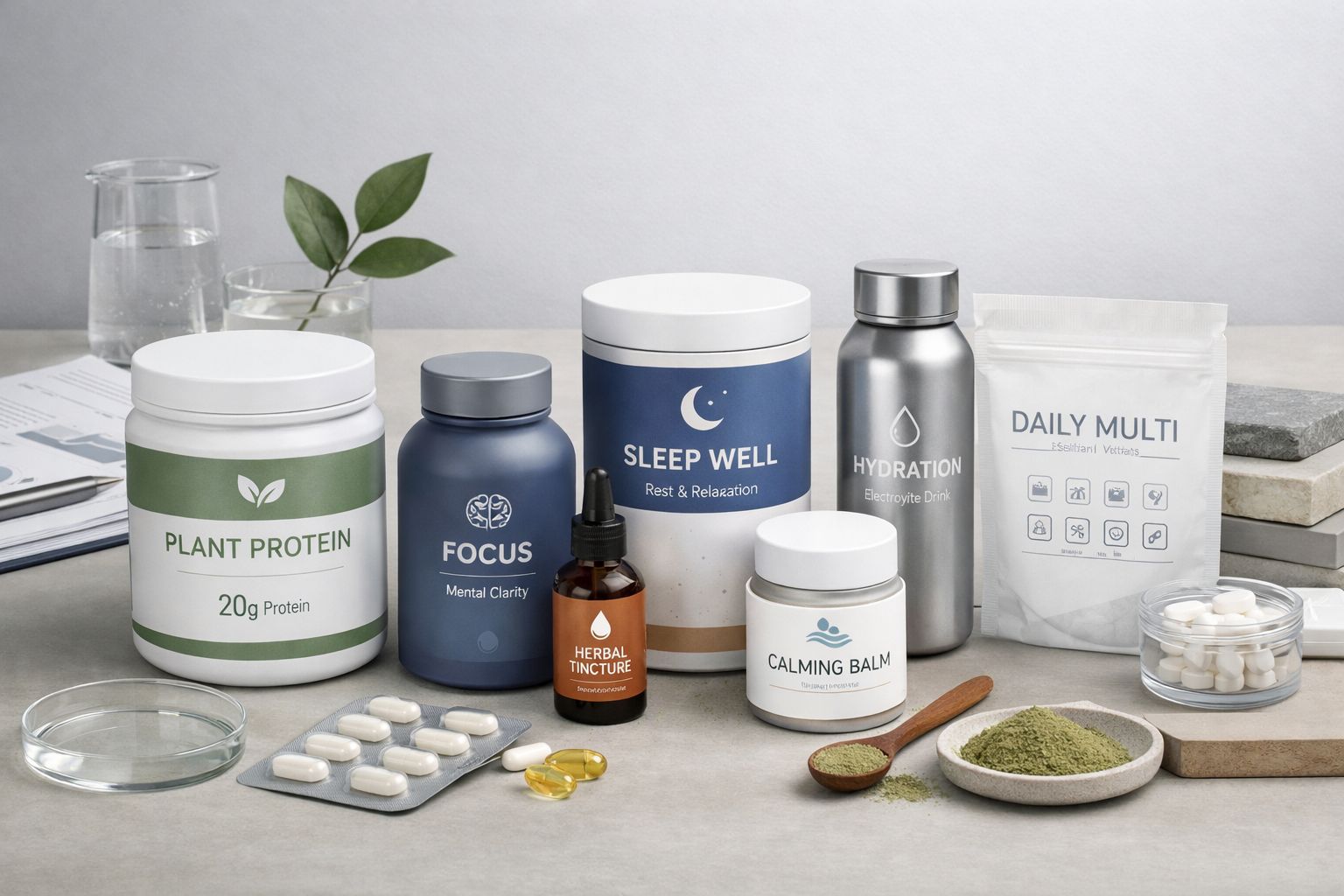
Functional, clean, and purpose-driven products are reshaping the wellness CPG category.
CPG wellness trends are evolving toward products that deliver clear functional benefits, meet clean formulation expectations, and demonstrate authentic purpose. Consumers are no longer satisfied with broad wellness claims or surface-level transparency. They expect products that solve specific needs, communicate clearly, and align with values they trust. These expectations are reshaping product development, brand positioning, and retail decision-making across the wellness category.
• Wellness has shifted from a lifestyle niche into a core CPG growth driver¹
• Functional benefits must be specific, credible, and easy to understand²
• Clean labels are now a baseline expectation, not a competitive advantage³
• Purpose-driven branding builds trust only when it is consistentlydemonstrated⁴
Wellness in the CPG market has matured rapidly.Early wellness products often leaned on aspirational messaging and loosely defined benefits. As consumer awareness grew, those signals lost impact.Today’s shoppers bring experience, skepticism, and context into purchasing decisions.
This evolution has moved wellness from a niche shelf set into a foundational expectation across food, beverage, supplements, personal care, and household goods. Wellness products are no longer evaluated in isolation. Consumers compare ingredients, claims, sourcing, and brand behavior across categories and channels.
For brands, that means credibility is earned over time, not launched through messaging. For retailers, it means assortment decisions increasingly hinge on clarity, consistency, and the ability to explain value quickly at shelf.
Function has become the anchor of modern CPG wellness trends. Consumers are less interested in broad wellness promises and more focused on outcomes they can understand and feel, such as energy,digestion, hydration, focus, sleep, or recovery.
That demand has narrowed what “functional” means. Benefits must be communicated clearly and responsibly, and they must remain consistent across packaging,marketing, and the product experience. Overstated or vague claims erode trust quickly, especially in health-adjacent categories.
Function also includes usability. Taste, convenience, format, and routine fit influence whether consumers perceive a product as valuable. Brands that win in functional wellness design products that deliver benefits without adding friction to daily life.

Clean labeling has become an expectation rather than a differentiator in wellness CPG. Shoppers increasingly assume that wellness products will avoid unnecessary additives, artificial ingredients, and confusing formulations.
At the same time, clean does not mean simple. Definitions vary by shopper and by category, and oversimplified messaging can create confusion or skepticism.The strongest clean-label strategies balance transparency with education,explaining what is in the product and why it is there.
When consumers can quickly understand ingredients, sourcing, and standards,confidence increases. In today’s market, clarity and restraint build trust more effectively than hype.
Purpose is now a defining element of CPG wellness trends, and it is also one of the most scrutinized. Consumers are receptive to values-led brands, but they are quick to detect inconsistency or performative messaging.
Purpose-driven brands earn trust by embedding values into operations, sourcing,partnerships, and long-term decisions. A mission statement is a starting point.Alignment between what a brand says and what it consistently does is what builds credibility.
In wellness categories, trust accumulates gradually. Every interaction, from packaging and customer support to retail presence, reinforces or undermines purpose over time.
The convergence of functional, clean, and purpose-driven expectations has practical implications across the value chain.For brands, it means prioritizing clarity over complexity, and substance over speed. Product development, messaging, and portfolio strategy must reinforce each other.
For retailers, these trends influence assortment decisions, shelf communication, and category storytelling. Products that clearly articulate function, meet clean expectations, and demonstrate authentic purpose are easier to support and easier for shoppers to understand.
Ultimately, the winners in wellness will be the brands and retailers that treat trust as an asset to build, not a claim to make.
CPG wellness trends are not about novelty. They are about refinement. As consumers become more discerning, brands and retailers must respond with focus, credibility, and long-term thinking.
Functional performance, clean transparency, and authentic purpose are no longer differentiators. They are expectations. The companies that translate these expectations into clear products and clear communication will be positioned for sustainable growth.
If you’re evaluating how wellness trends affect your brand, portfolio, or retail strategy, CPGBrokers helps translate market shifts into practical direction. Reach out to discuss how today’s CPG wellness trends may shape your next move.
1. McKinsey & Company – Consumer health and wellness insights
2. NielsenIQ – Health and wellness consumer insights
3. U.S. Food and Drug Administration – Food labeling and nutrition
4. Edelman – Trust Barometer
